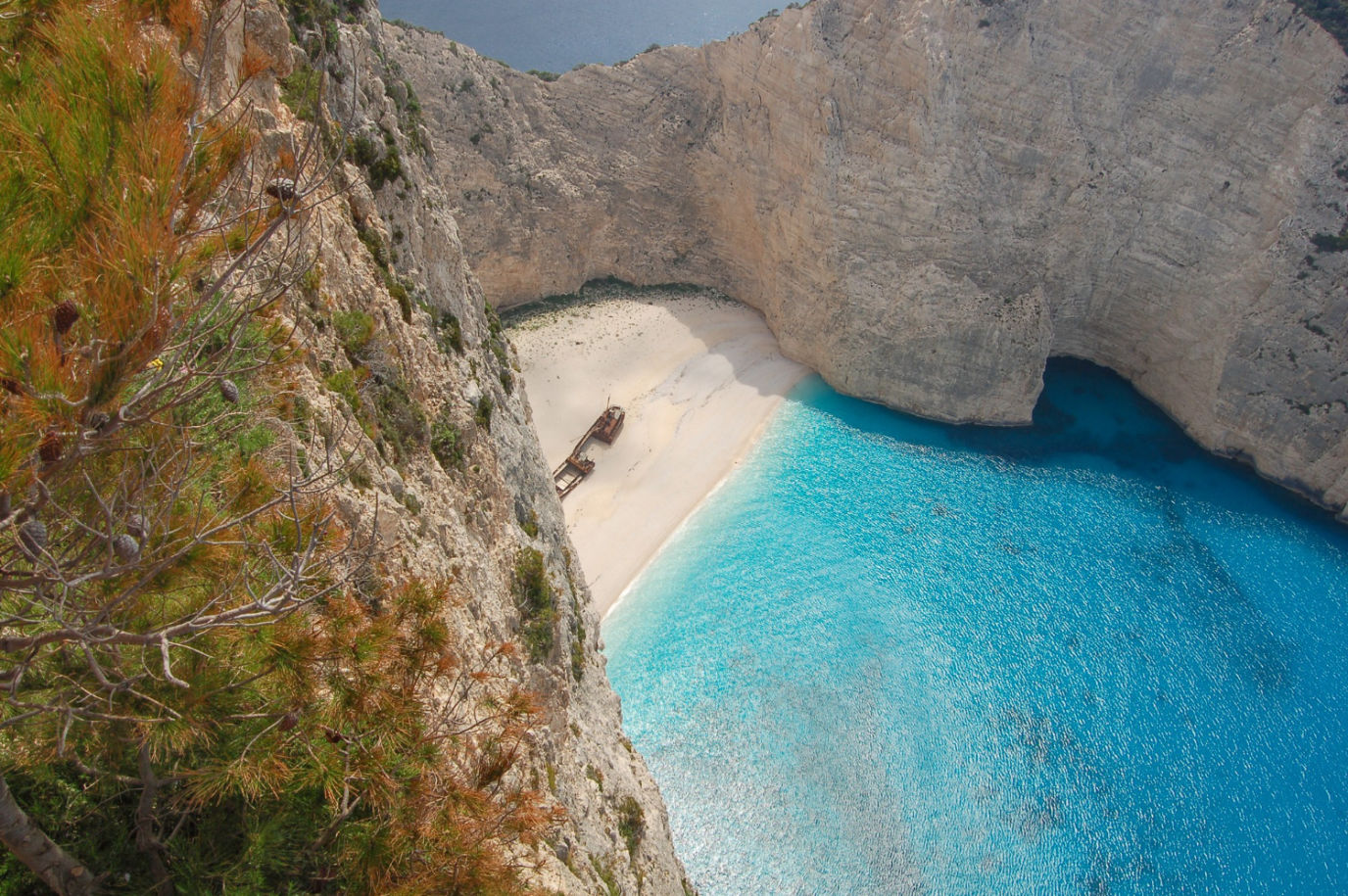
But Europe still has corners that feel quieter, slower, almost forgotten in a good way.
You just have to look beyond the famous names.
Across the continent there are hidden beaches tucked beneath limestone cliffs, tiny fishing villages with calm turquoise water, wild Atlantic coves where the only sound is wind moving through the rocks. Some are difficult to reach. Others sit only minutes away from busy tourist hotspots, somehow ignored by the crowds rushing somewhere else.
And honestly, those places tend to stay with people longer.
Cala Estreta, Spain
Along Spain’s Costa Brava, most summer visitors drift toward crowded resort beaches packed with umbrellas and restaurants. But Cala Estreta feels different from the moment the road disappears.
You walk through pine forest first. Dusty paths, warm air, the smell of dry earth and salt. Then suddenly the coastline opens up.
The beach itself is small and natural, framed by rough rocks and clear Mediterranean water that changes color every hour depending on the light. No giant hotels. No loud music blasting from bars. Just sea, stone, and people quietly swimming.
Locals tend to arrive early with coolers and stay the whole day.
It still feels wonderfully imperfect.
Praia da Ursa, Portugal
Not far from Lisbon, Praia da Ursa remains one of Portugal’s most dramatic hidden beaches. Getting there is part of the experience, though maybe not for everyone.
The trail down is steep and uneven. Flip-flops are a terrible idea. But once visitors finally reach the sand, the landscape almost looks prehistoric.
Huge rock formations rise from the Atlantic Ocean. Waves crash hard against the shore. Wind moves constantly through the cliffs.
There are no beach clubs here. No rows of sun loungers.
Just raw coastline.
Even during summer, it can feel surprisingly empty compared to Portugal’s more famous beaches farther south in the Algarve.
Pasjača Beach, Croatia
Croatia has exploded in popularity over the last decade, but Pasjača Beach somehow still escapes mass tourism.
Hidden beneath towering cliffs near Dubrovnik, the beach is reached through a narrow carved pathway descending dramatically toward the sea. The first glimpse of the Adriatic from the stairs almost doesn’t look real.
The water is unbelievably clear.
Tiny waves hit smooth pebbles while steep cliffs protect the beach from noise and traffic above. There isn’t much infrastructure, which honestly is part of the appeal.
Bring water. Bring shade if possible.
And maybe leave expectations behind too.
Because Pasjača feels more like discovering a secret than visiting a tourist attraction.
Voutoumi Beach, Greece
The Greek islands are hardly undiscovered, but smaller Ionian islands still hide beaches that feel untouched.
Voutoumi Beach on Antipaxos is one of them.
The sea here looks almost unreal, bright turquoise fading into deep blue farther out. Boats float above the water so clearly they seem suspended in air.
Most travelers only visit for a few hours before moving on. Stay later if you can.
When afternoon boats disappear, the island grows quiet again. Cicadas buzz in the trees. Sunlight softens. Locals linger at small tavernas overlooking the bay.
It becomes the kind of evening people remember years later without fully understanding why.
Saleccia Beach, Corsica
Corsica belongs to France technically, but emotionally it feels like its own world.
Saleccia Beach sits in the island’s northern desert region, surrounded by wild landscapes and pale sand dunes. Reaching it requires effort. Visitors either drive rough dirt roads or arrive by boat.
That distance helps preserve its atmosphere.
The beach stretches wide and quiet with soft white sand and transparent water that resembles the Caribbean more than the Mediterranean.
No giant developments dominate the shoreline.
Just nature, mostly untouched.
On windy days the sea becomes rough and dramatic. On calm mornings, it turns perfectly still.
Both versions are beautiful.
Gjipe Beach, Albania
Albania’s Riviera has become increasingly popular, though many beaches still feel far less commercial than neighboring Greece or Croatia.
Gjipe Beach sits between massive canyon cliffs and can only be reached by boat or hiking trail. That alone keeps many tourists away.
The walk down isn’t long but summer heat makes it feel harder.
Still, once the canyon opens toward the sea, the view is stunning. Pale stones, deep blue water, steep rock walls.
People swim for hours here because the water stays cool even during the hottest months.
At sunset, everything turns gold.
And suddenly nobody seems in a hurry anymore.
Kynance Cove, England
Hidden beaches are not only Mediterranean.
Along England’s Cornish coastline, Kynance Cove offers dramatic scenery that feels almost cinematic during low tide.
Dark rocks rise sharply from bright turquoise water while sea caves appear as tides retreat. Weather changes quickly here. One moment there’s sunshine, the next heavy clouds rolling across the Atlantic.
That unpredictability gives the beach personality.
Summer mornings tend to be quieter before visitors arrive from nearby towns. Walk farther along the coastal path and smaller hidden coves start appearing between cliffs.
It feels wild in a very British kind of way.
Plage de l'Ostriconi, France
Northern Corsica appears again because honestly, the island is full of beaches that still escape mainstream tourism.
Plage de l'Ostriconi feels remote even though it’s relatively accessible. Visitors cross dunes and grassy trails before reaching the wide open shoreline.
Wind shapes the landscape constantly.
Unlike polished resort beaches, this place feels alive and slightly untamed.
Waves attract surfers sometimes, though swimmers still spread out along the sand with plenty of space left over.
Even in August, silence exists here.
That’s becoming rare in Europe.
Sveti Ivan Beach, Croatia
On the island of Cres, Sveti Ivan Beach remains one of Croatia’s quieter treasures.
The descent is steep, which scares away casual tourists carrying inflatable flamingos and giant coolers.
Good.
Because the reward at the bottom feels worth every difficult step.
The bay curves gently around brilliant blue water while white stones shimmer beneath sunlight. From above, the beach looks tiny compared to the cliffs surrounding it.
Swimming here feels peaceful in a way larger beaches rarely manage anymore.
Sometimes fewer facilities create better experiences.
Sandwood Bay, Scotland
Scotland may not sound like beach territory at first, but Sandwood Bay is unforgettable.
Located in the remote Highlands, this enormous stretch of pinkish sand requires a long walk across moorland to reach.
No roads. No resorts. No beach bars.
Only wind, waves, and silence.
The Atlantic crashes hard here even during summer. Temperatures stay cool. But the scenery feels almost spiritual.
Huge skies hang over dark cliffs while seabirds circle above the coastline.
People don’t visit Sandwood Bay for sunbathing.
They come because places like this remind us how small we really are.
Why Hidden Beaches Matter More Than Ever
Travel changed dramatically over the last decade.
Algorithms now decide where people vacation. Viral videos send thousands of tourists flooding into places that once felt local and personal. Entire coastlines become commercial almost overnight.
Hidden beaches offer something different.
Not luxury necessarily. Not convenience either.
But atmosphere.
A feeling of discovery.
Moments where travel stops feeling transactional and starts becoming emotional again.
Sometimes reaching these places requires effort. Dirt roads, hiking trails, early mornings. Yet maybe that’s exactly why they remain special.
Because not everything beautiful should be easy.
And honestly, some of Europe’s best coastal memories still happen far away from the famous postcard beaches.
The quiet ones tend to stay with people longer.